Every service below has its own Fairhaven page — historic-home considerations, City of Bellingham permit and design-review notes, and bay-side exposure details.
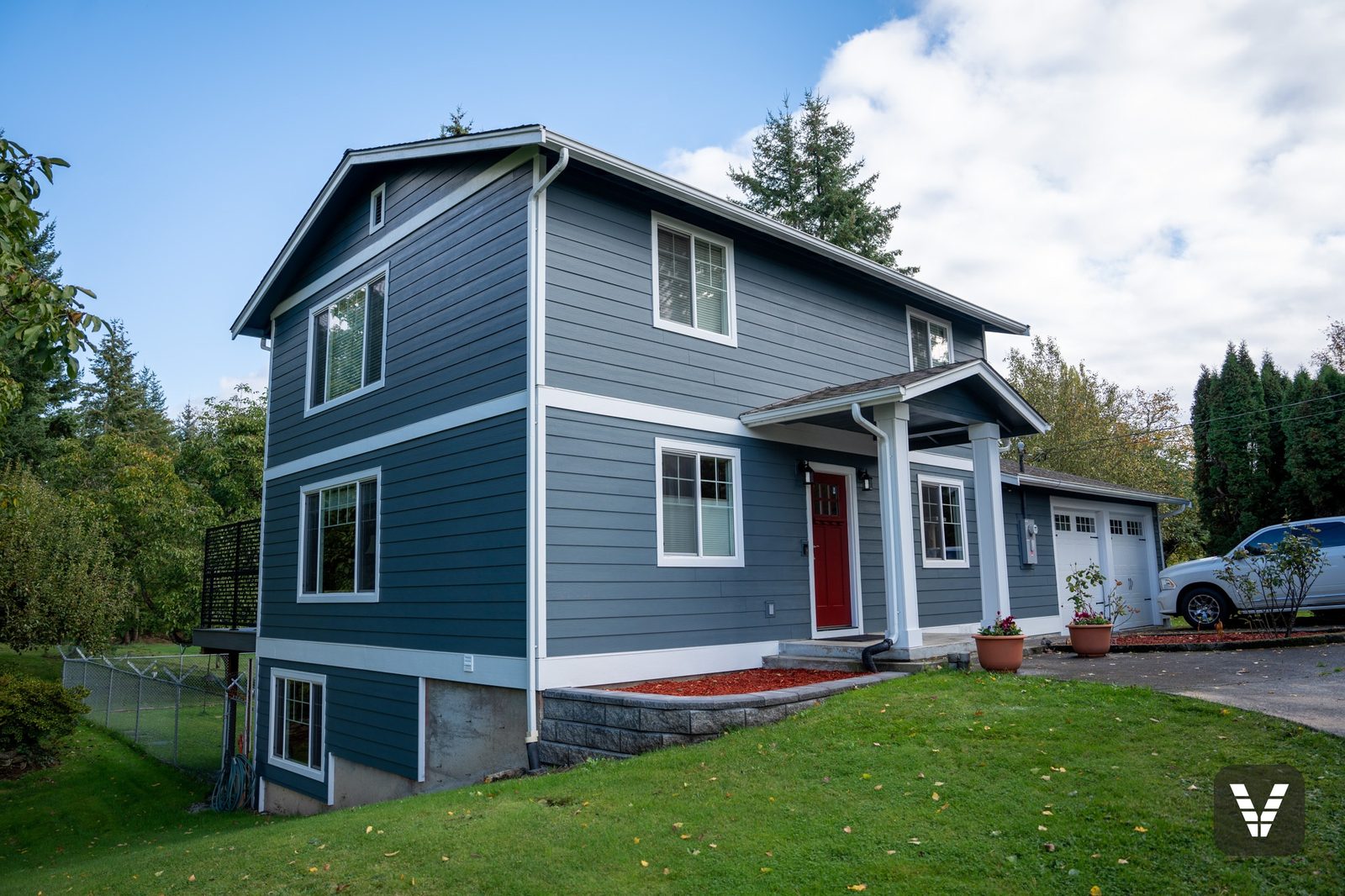
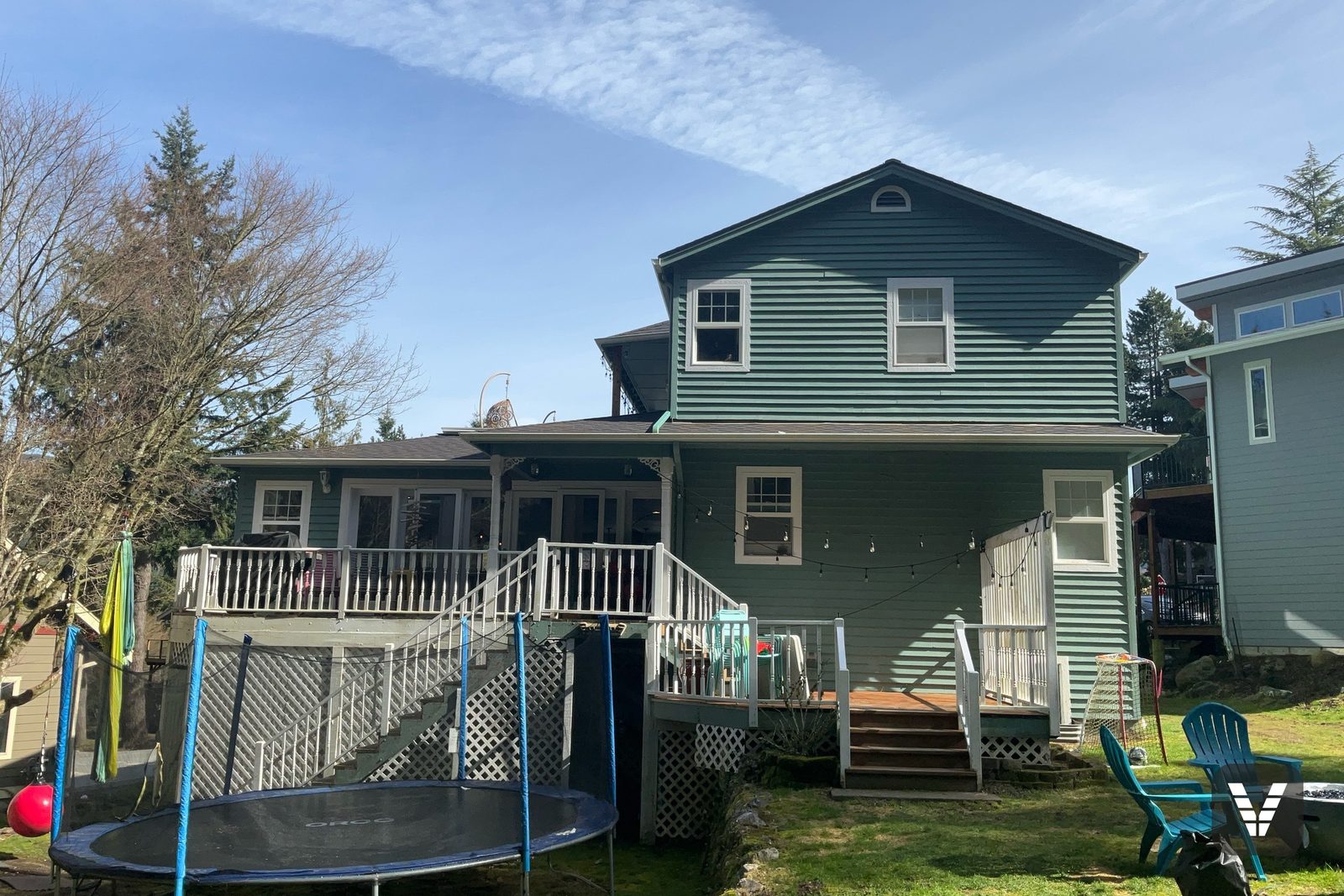
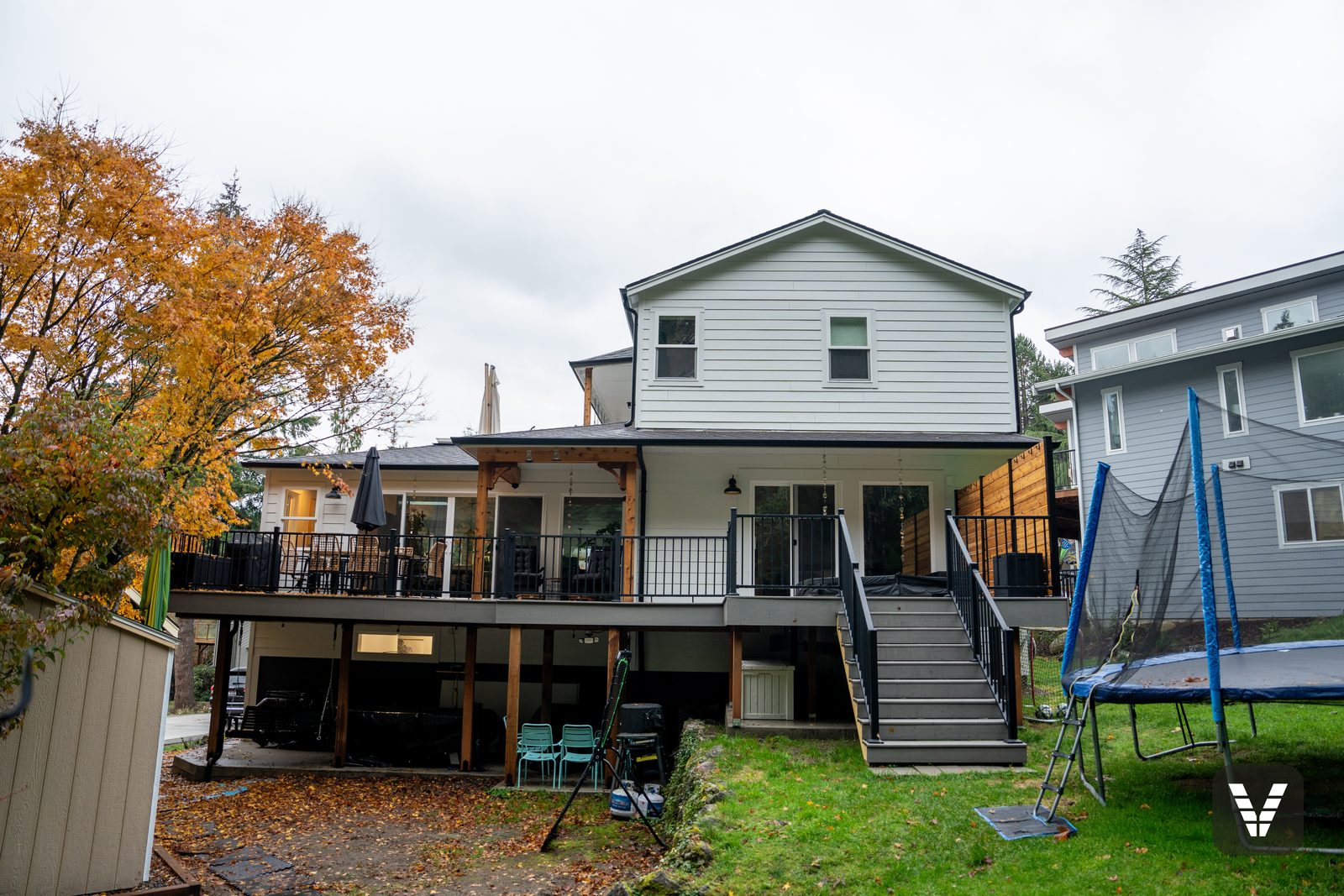
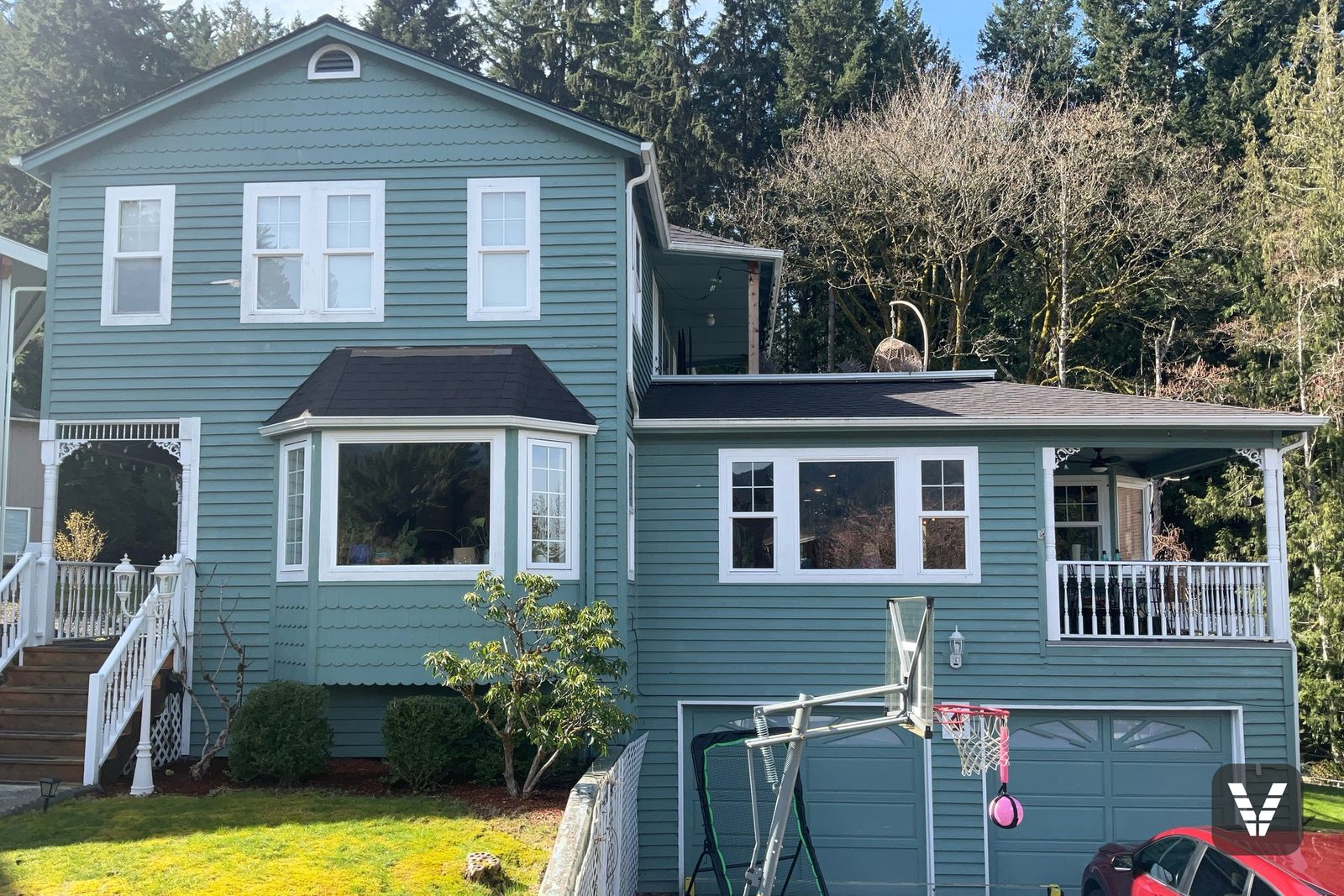
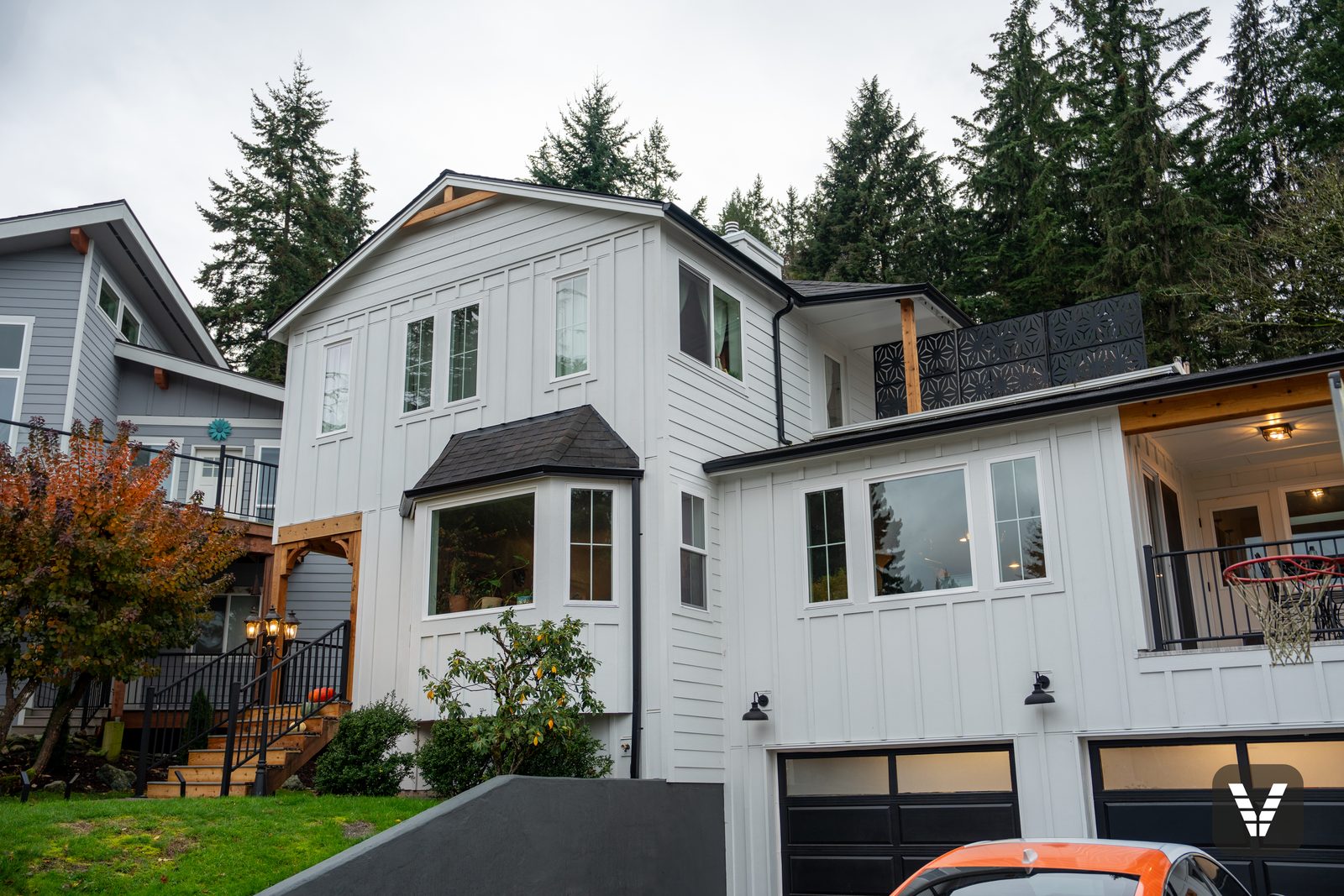
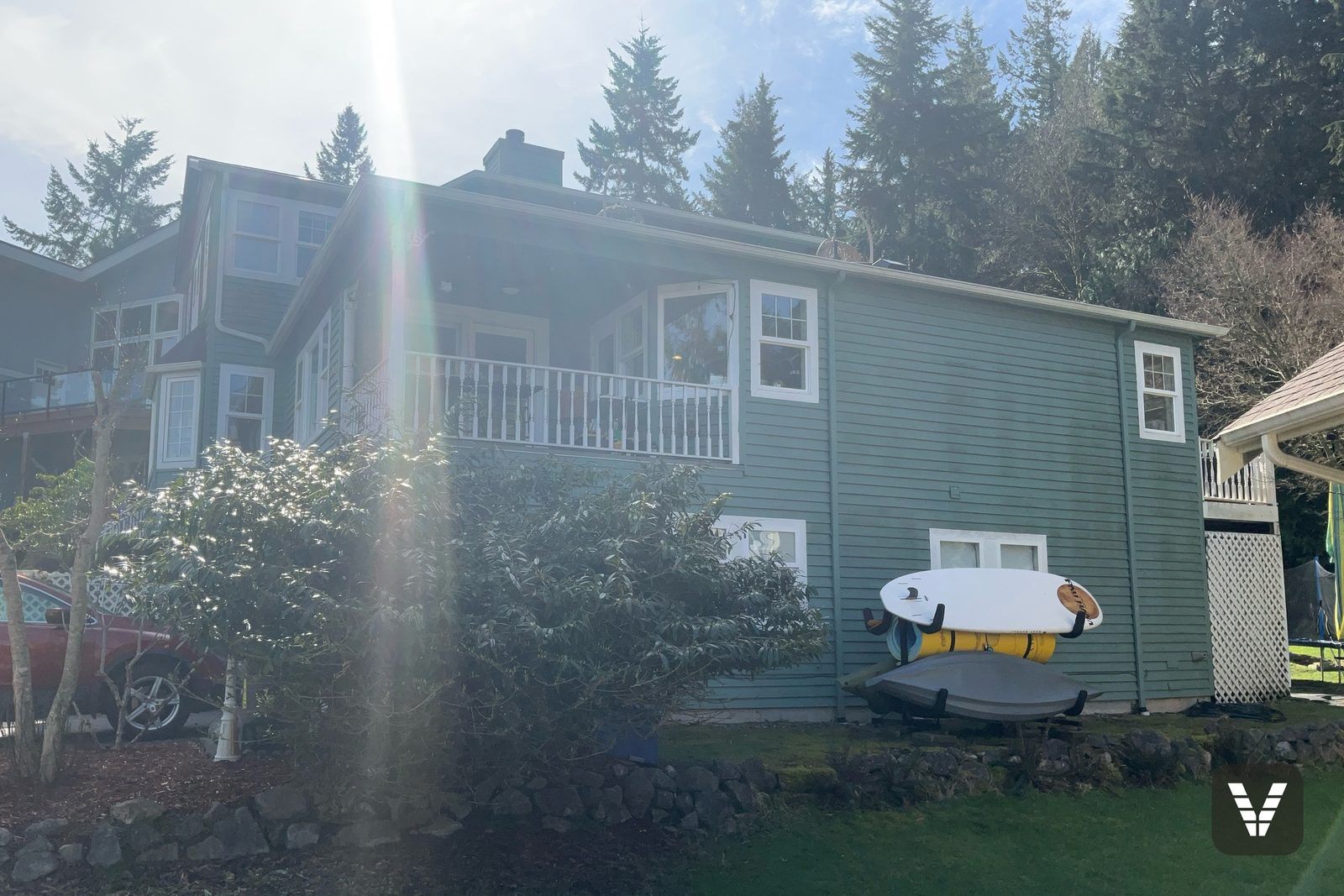
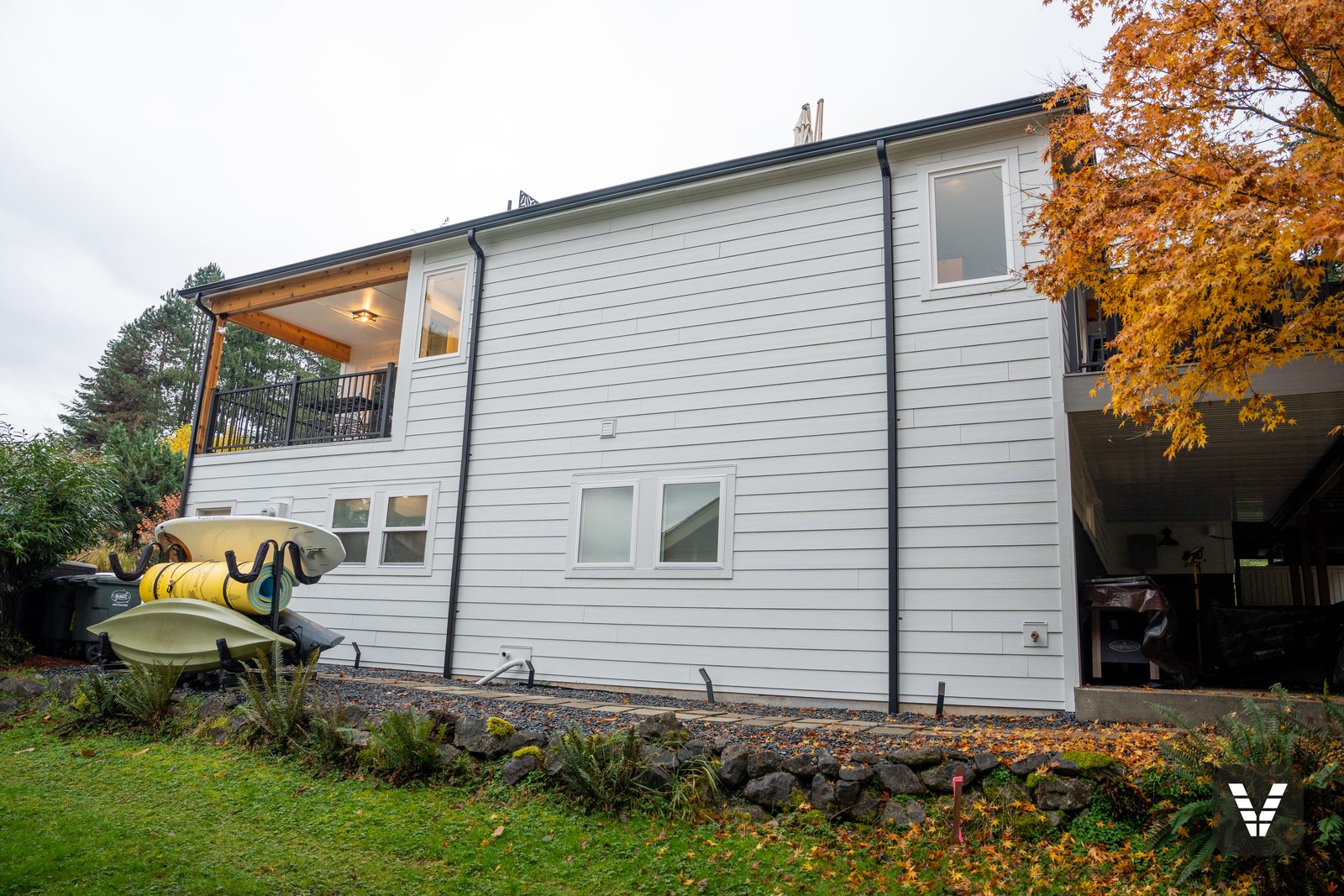
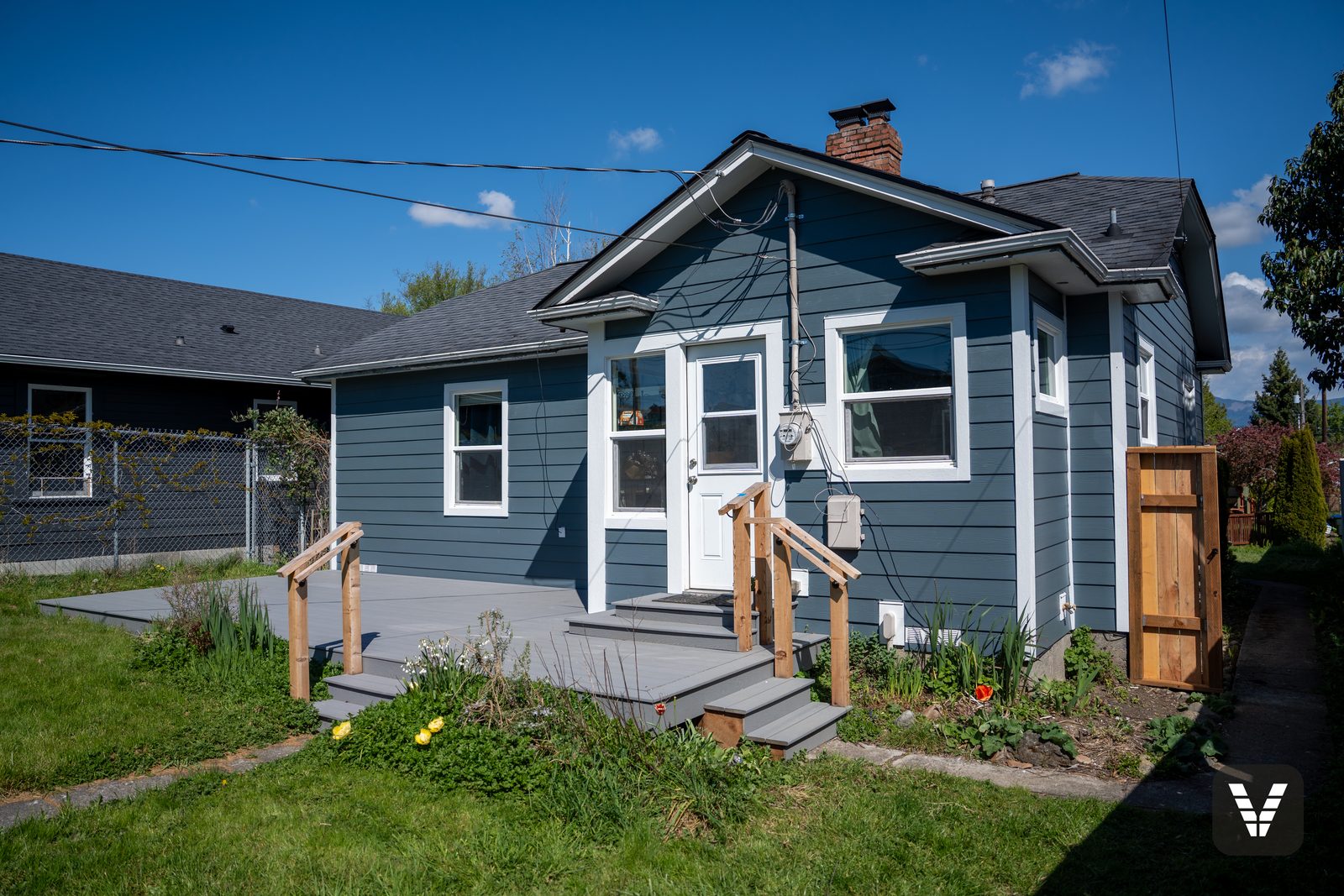
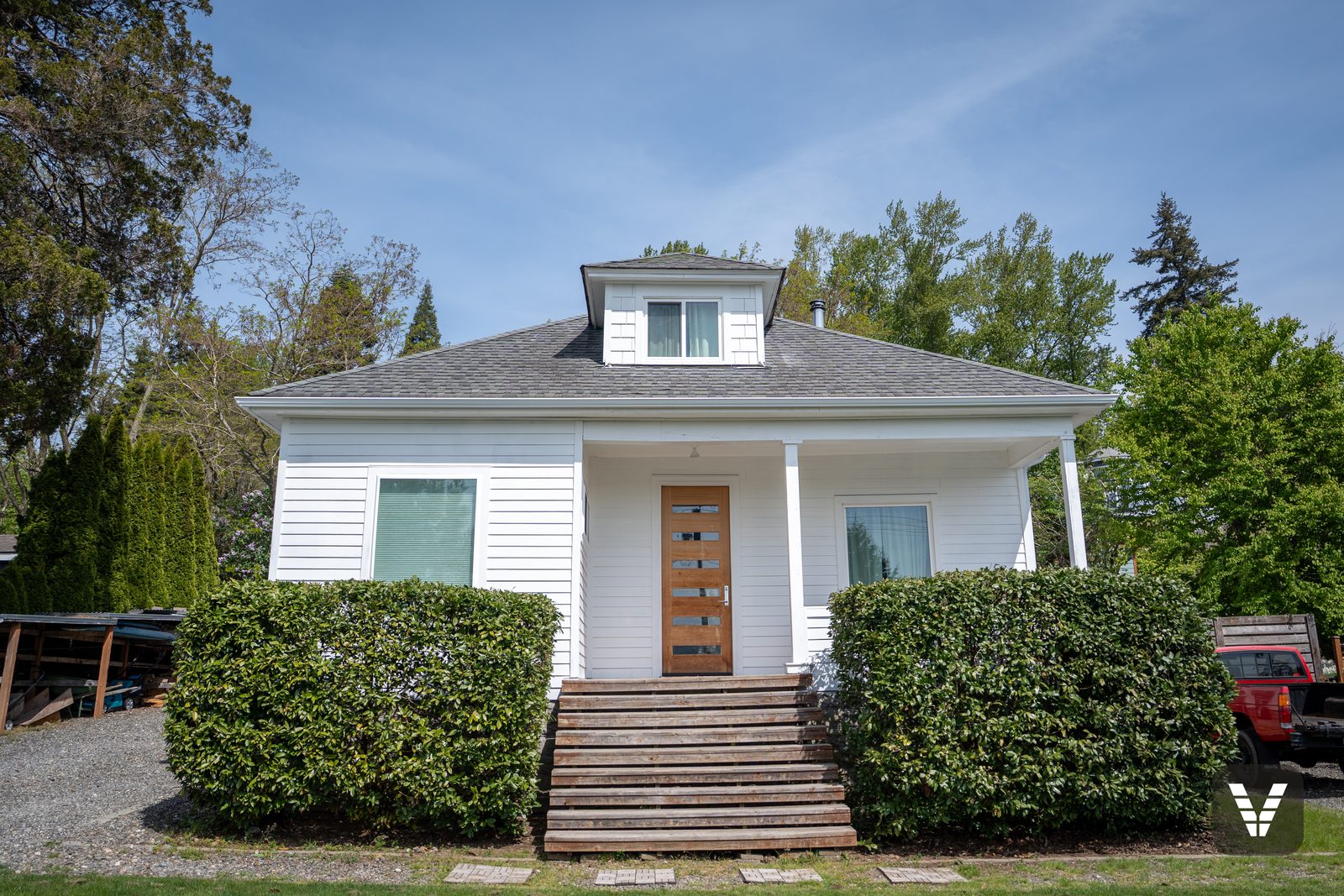
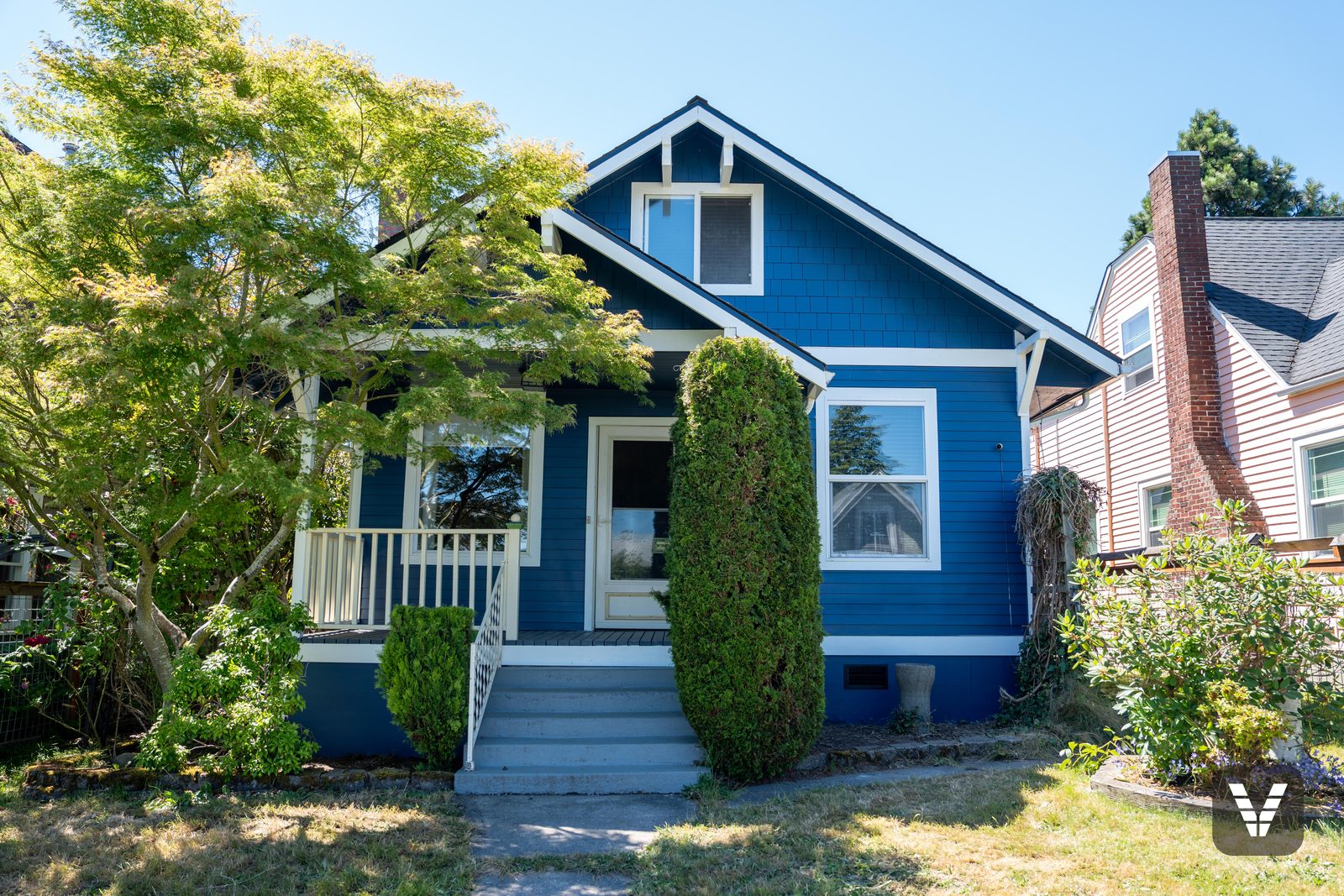
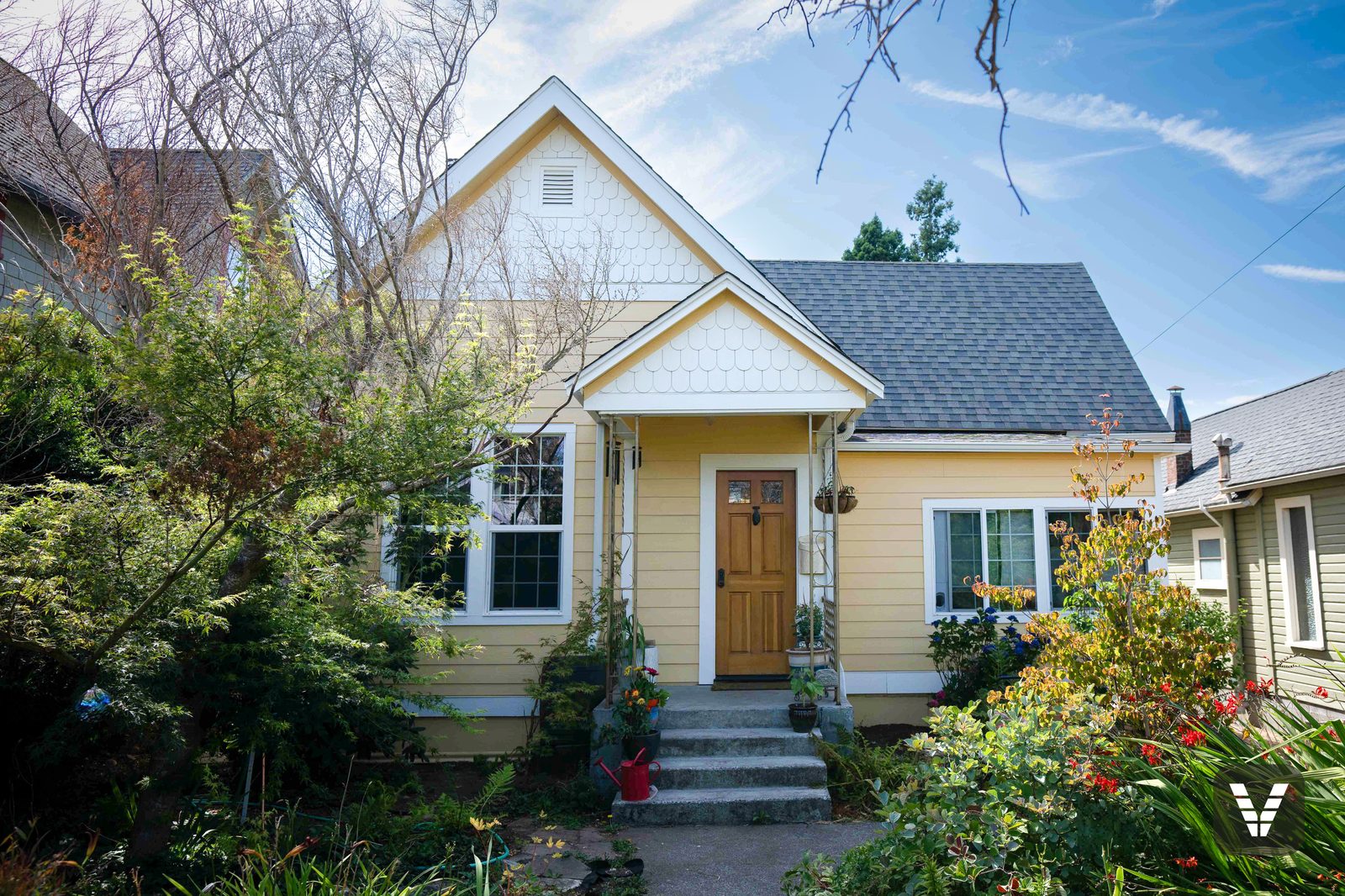
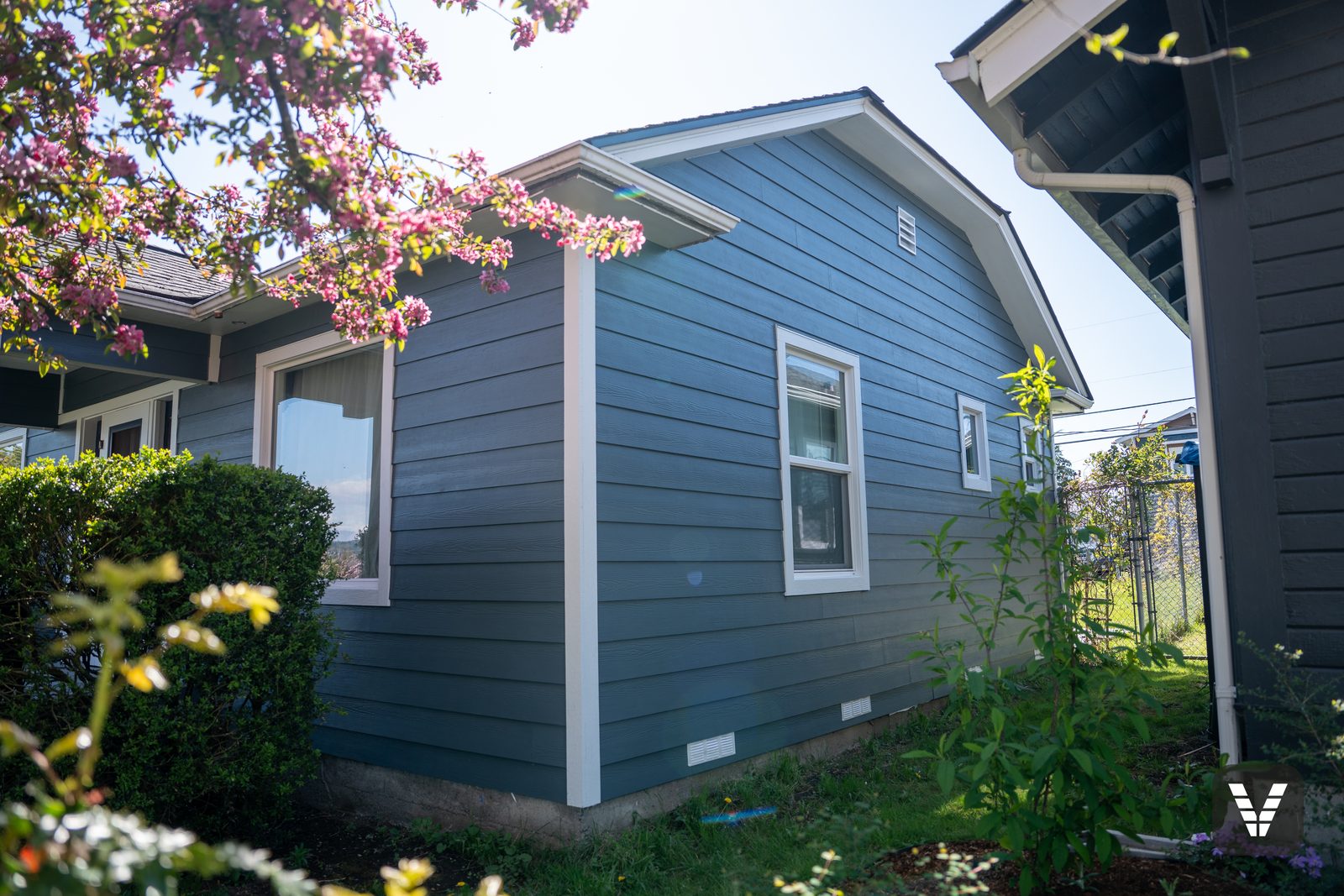
This is the work Fairhaven homes ask of us — from 1890s boom-era Victorians to Edgemoor's midcentury view lots. Flip through and picture your home next.
Get a Free Estimate →Fairhaven holds the oldest housing we work on: homes from the 1889–93 railroad boom, when the town grew from about 150 people to roughly 8,000 in a single year, plus the streetcar-era craftsmans that climbed South Hill after it. Many still carry original cedar, ornate trim, and window openings framed before standard dimensions existed. Exteriors here fail gracefully but deeply — paint hides checked boards, and a century of layered repairs often conceals the sheathing's real condition until the wall is open. The district also takes weather straight off Bellingham Bay, so west- and south-facing walls carry the most wear. Edgemoor is the exception that proves the rule: mostly built from the 1960s onward, its problems are mid-century aluminum windows and tree-shaded walls, not Victorian trim.
We replace siding on period homes with profiles that respect the original lines — fiber cement reproductions of classic lap and shingle patterns are a specialty — and since Fairhaven has been part of Bellingham since 1903, we run every permit through the City of Bellingham, including the certificate of alteration that homes on the city's local historic register need before exterior changes. We handle that step as part of the job — filed, tracked, and scheduled, not billed to you as a research project.
…and the surrounding south side of Bellingham.

No pressure, no jargon — a clear path from first call to final inspection.
Call (360) 296-9380 or send the form — tell us a little about your home and what's failing.
We measure at your home, open up anything suspicious with your OK, and write a bid specific to your house — minimal boilerplate.
Permits pulled, work scheduled around the weather, and the final inspection passed before we call it finished.
Every bid is measured on site and itemized — these are the factors that actually change the number.
Wall area drives material; height drives scaffold time. A two-story home near Fairhaven Historic District prices differently than a rambler off South Hill.
Siding replacement →What's behind the old siding is the honest unknown — we scope known rot into the bid and price discovered rot transparently, per repair.
Rot repair →Hardie ColorPlus, primed fiber cement, or engineered wood — we quote options side by side so you see the real difference.
Compare materials →Combining siding and windows saves one full mobilization and gets properly integrated flashing — the cheapest time to do windows is during a re-side.
Window replacement →Fairhaven was built in a sprint. Platted in 1883 and convinced it would be the Great Northern Railway's western terminus, the town exploded from about 150 people in 1889 to roughly 8,000 in 1890 — brick blocks rose in the commercial core while speculative Victorians and workers' cottages spread up the hillside above the bay. When the railroad chose Seattle and the Panic of 1893 hit, building stopped almost overnight, leaving an unusually concentrated stock of 1890s wood-framed homes — fast-built, but framed in old-growth cedar and fir that modern lumber can't match.
The second wave was steadier. Pacific American Fisheries opened on the bay shore in 1899 and grew into one of the world's largest salmon canneries, and the streetcar pushed craftsman-era homes up South Hill through the early 1900s. Fairhaven voted to consolidate into Bellingham in 1903, but its housing kept its own character: ornate trim, full-dimension framing, and window openings cut before standard sizes existed — which is why nothing here gets measured from a catalog.
Later eras filled in the edges. Happy Valley's farm-and-cottage mix took on apartments as Western Washington University grew from the late 1960s, and Edgemoor — where Lairmont Manor stood nearly alone after 1914 — was developed from the 1960s and '70s onward, bringing mid-century construction, aluminum windows, and heavily treed lots to the district's southwest corner.
For exterior work, that history sorts Fairhaven into three different jobs: boom-era and South Hill homes that need profile-matched siding, lead-safe practices, and individually measured openings; the brick commercial core, which is its own world; and post-war Edgemoor and Happy Valley, where aging aluminum windows and engineered siding — not Victorian trim — set the scope. We bid to the era in front of us.
A free on-site estimate anywhere in Fairhaven — measured at your home, itemized, and specific to your house.