Moss Country Maintenance: The 20-Minute Fall Walk-Around
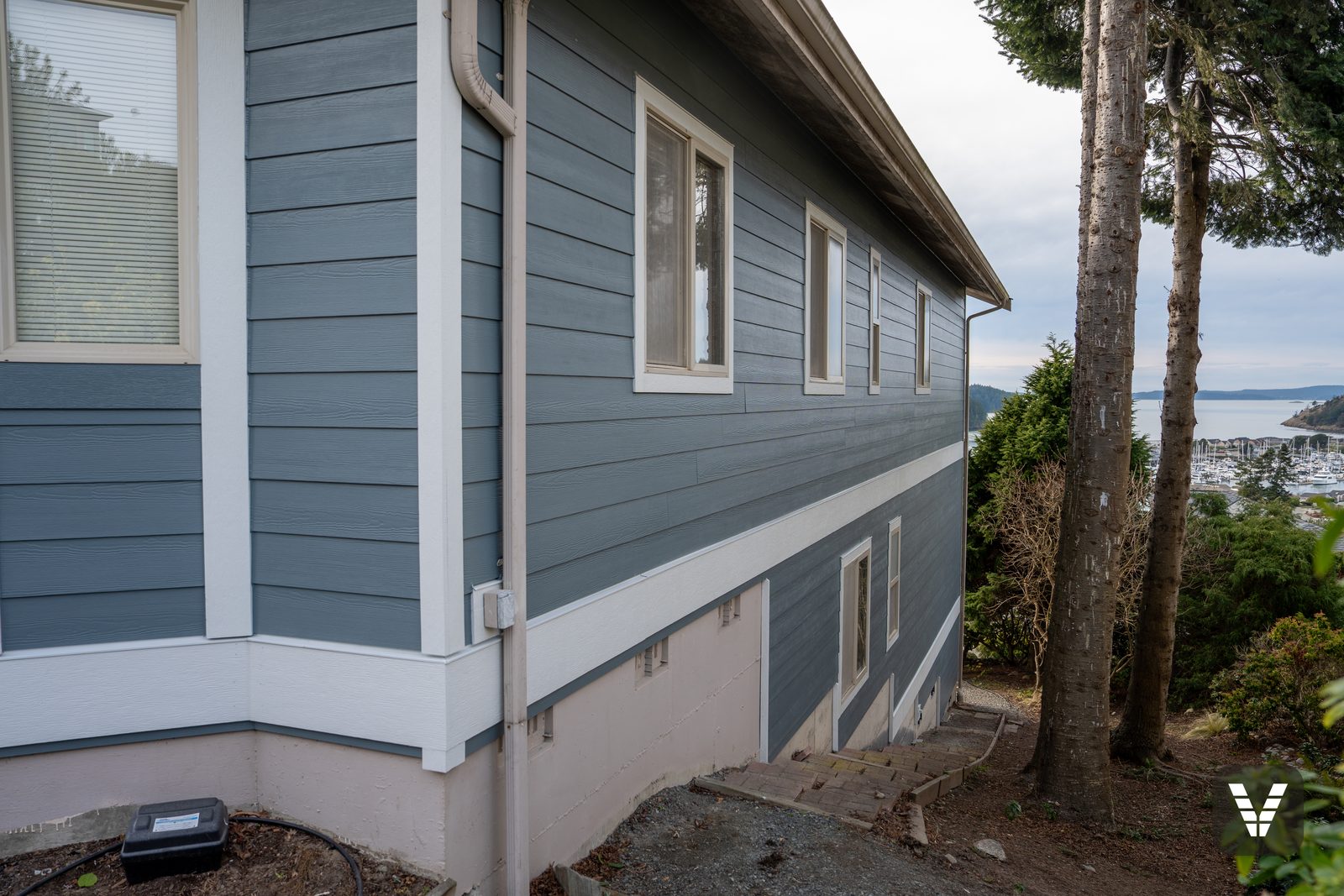
Short version: once every October, take twenty minutes and walk your exterior with a short checklist — gutters and downspouts, roof edges, the bottom courses of siding, sealant joints, wherever moss is starting, and anything touching your walls. Moss tells you where water lingers; soft spots tell you where it’s already winning. Catch either one in the fall and it’s maintenance. Find it two winters later and it’s a repair bid.
Why October, and why moss is the tell
Western Washington exteriors don't fail in one storm. They fail over wet seasons — a clogged gutter that overflows all winter, a sealant joint that opened over the summer, a sprinkler that soaked the same corner of the house for months. The cheapest maintenance you can do is a slow lap around the house every fall, before the rain settles in for good.
Moss is worth watching because it's an honest witness. It only grows where a surface stays damp — so wherever you find it, water is lingering. Moss along one stretch of roof edge points at a shaded slope or a slow gutter. Moss or green film on a band of siding points at splash-back, a leaking gutter seam above, or a wall that never dries. The moss itself is rarely the emergency; what it's telling you about moisture usually is.
Twenty minutes is genuinely enough. You're not doing repairs on this walk — you're making a short list while the weather still lets you fix things easily.
The most common thing we find on estimate visits isn't failed siding — it's a downspout dumping water right at the base of a wall, and a rotted bottom course directly below it. Before you budget for anything, follow every downspout on your house and make sure the water actually leaves.
The six checks, in order
Walk the house once, close to the walls, and check these six things:
- 1. Gutters and downspouts. Look for standing debris, sagging runs, and stains or drip lines on the fascia and siding below. Confirm downspouts actually carry water away from the foundation instead of dumping it at the wall.
- 2. Roof edges and shaded slopes. From the ground, scan for moss ridges, lifted shingles, and debris piled in valleys. North-facing and tree-shaded sections go first.
- 3. The bottom courses of siding. Press them every few feet with your thumb. This is the splash zone and the last place walls dry out — soft, swollen, or flaking boards down low are your earliest warning of rot.
- 4. Sealant joints. Check where siding meets window and door trim, at corners, and around pipes, vents, and hose bibs. Caulk that has cracked, shrunk back, or pulled away from one side is an open door for wind-driven rain.
- 5. Where moss and green film start. Note every patch, then look up — almost every one has a moisture source above or beside it that you can correct.
- 6. Grade, plants, and sprinklers. Soil, bark, or planters touching siding hold moisture against it. Shrubs should sit clear of the wall, and irrigation should never hit the house.
Do the same lap indoors in five minutes: look at the drywall and sills under windows on any wall that concerned you outside. Staining or bubbling paint inside means water is already getting past the exterior.

What to do with the list you just made
Most of what this walk turns up is a weekend of homeowner work: clean the gutters, brush moss off hard surfaces, wash algae with a garden hose and mild soap, re-cut a downspout extension, trim the shrubs back. Re-caulking a failed joint is also fair game if you're comfortable — remove the old sealant first rather than bridging over it, and use an exterior-grade sealant rated for the materials on either side of the joint.
A few findings deserve a professional look instead of a tube of caulk: siding that feels soft or spongy, boards that have cupped or pulled loose, staining that comes back after cleaning, or any interior clue like musty smells and stained drywall. Those point at water behind the siding, and the fix isn't on the surface.
The habit matters more than any single check. A wall that gets looked at every October almost never surprises its owner; problems get caught as a cleaning or a small repair instead of a re-side. And if something on your list worries you, a free estimate visit settles it — we probe the suspect spots and tell you plainly whether you're looking at maintenance, a repair, or something bigger.