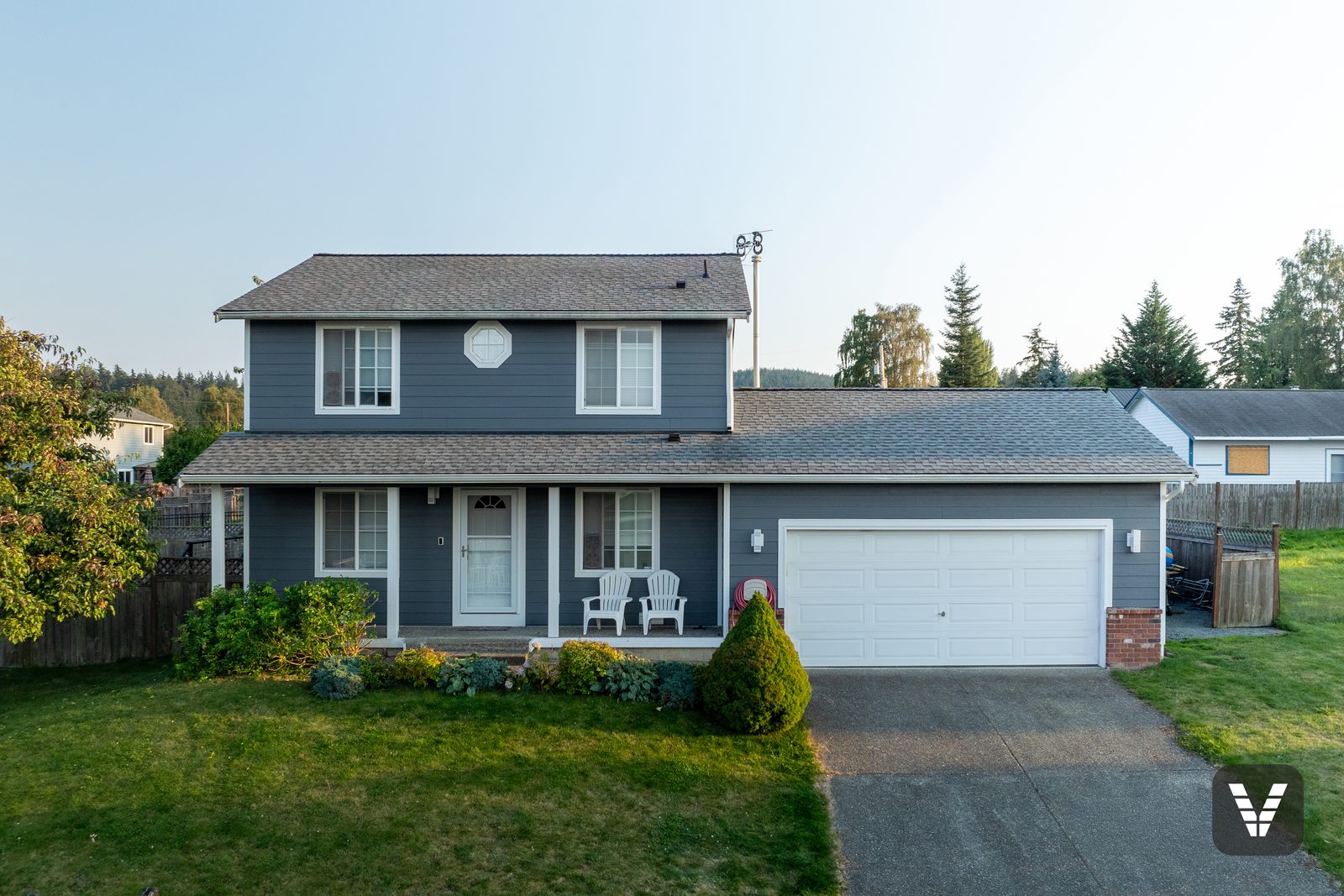
How to Tell If Your Siding Is Failing, or Just Dirty
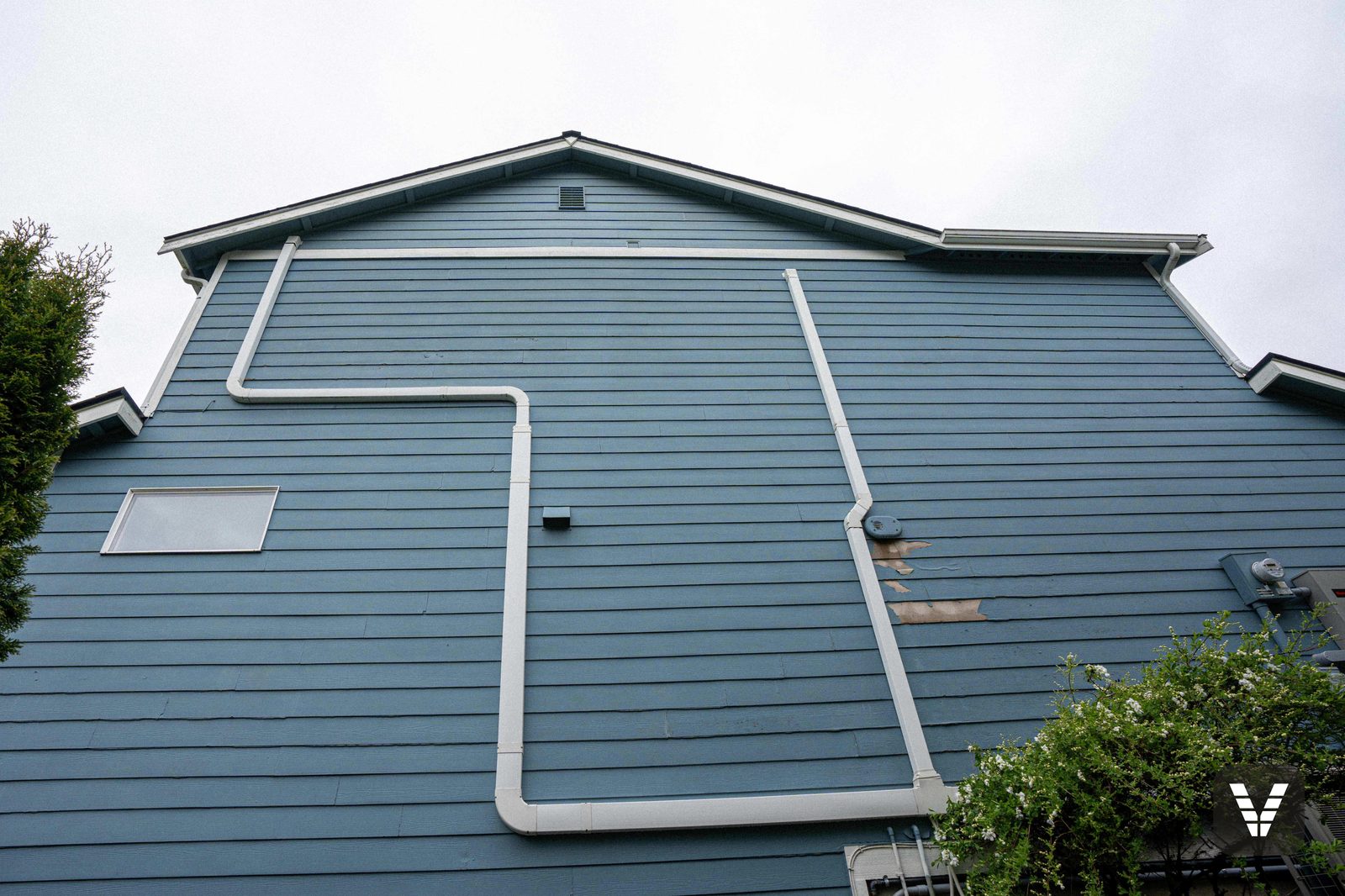
Short version: streaks, green film, and chalky fading usually wash off with a hose and a soft brush — that’s dirt and algae, not failure. Soft spots, cupped or cracked boards, open seams, and peeling sheets of paint don’t wash off — that’s siding at the end of its life. Here’s how to tell which one you’re looking at before you spend a dollar.
Start with the streaks: what's usually just dirt
Most of what makes Northwest siding look bad is growing on it, not eating it. Months of damp shade feed green algae, black mildew spotting, and moss — especially on north-facing walls, under eaves, and anywhere trees keep the sun off the surface. It looks alarming, but it sits on top of the finish.
The test is simple: pick a discolored spot and wash it with a garden hose, a soft brush, and a bucket of mild soapy water. If the color comes back and the surface underneath is smooth and firm, you had a cleaning problem, not a siding problem. Dirt splash-back near the ground, gutter overflow stains, and chalky fading on older paint all behave the same way — cosmetic, and fixable without a contractor.
One caution: skip the pressure washer, or keep it on a wide, low-pressure fan from several feet back. High pressure drives water up behind lap siding and into seams — it can create the exact moisture problem you were checking for.
A lot of the "failing siding" calls we get turn out to be algae on a shaded wall. Before you budget for a project, spend twenty minutes with a hose and a soft brush — if the problem washes off, you just saved yourself the cost of new siding.
The signs that are never just dirt
Some symptoms mean the siding — or something behind it — is failing. No amount of cleaning changes these:
- Soft spots. Press on the boards, especially the bottom courses and around windows and doors. Sound siding feels solid; siding hiding rot flexes, dents, or crumbles under your thumb.
- Cupping, warping, or buckling. Boards that no longer lie flat have taken on moisture and let go of their fasteners. They won't flatten back out.
- Cracks, splits, and missing pieces. Every open joint is a path for wind-driven rain — and in Western Washington, rain arrives sideways.
- Paint peeling in sheets. Small chips are weathering. Paint releasing in large sheets usually means moisture is pushing out from inside the board.
- Failed caulk and gaps at seams. Look where siding meets trim, corners, and penetrations. Shrunken, cracked sealant means the wall's first line of defense is open.
- Clues from indoors. Musty smells, stained drywall below windows, or bubbling paint on an exterior wall point to water already past the siding.
Any one of these on a small area can be a repair. Several of them, spread across a wall, usually means the siding has reached the end of its service life — and the more important question becomes what shape the sheathing behind it is in.
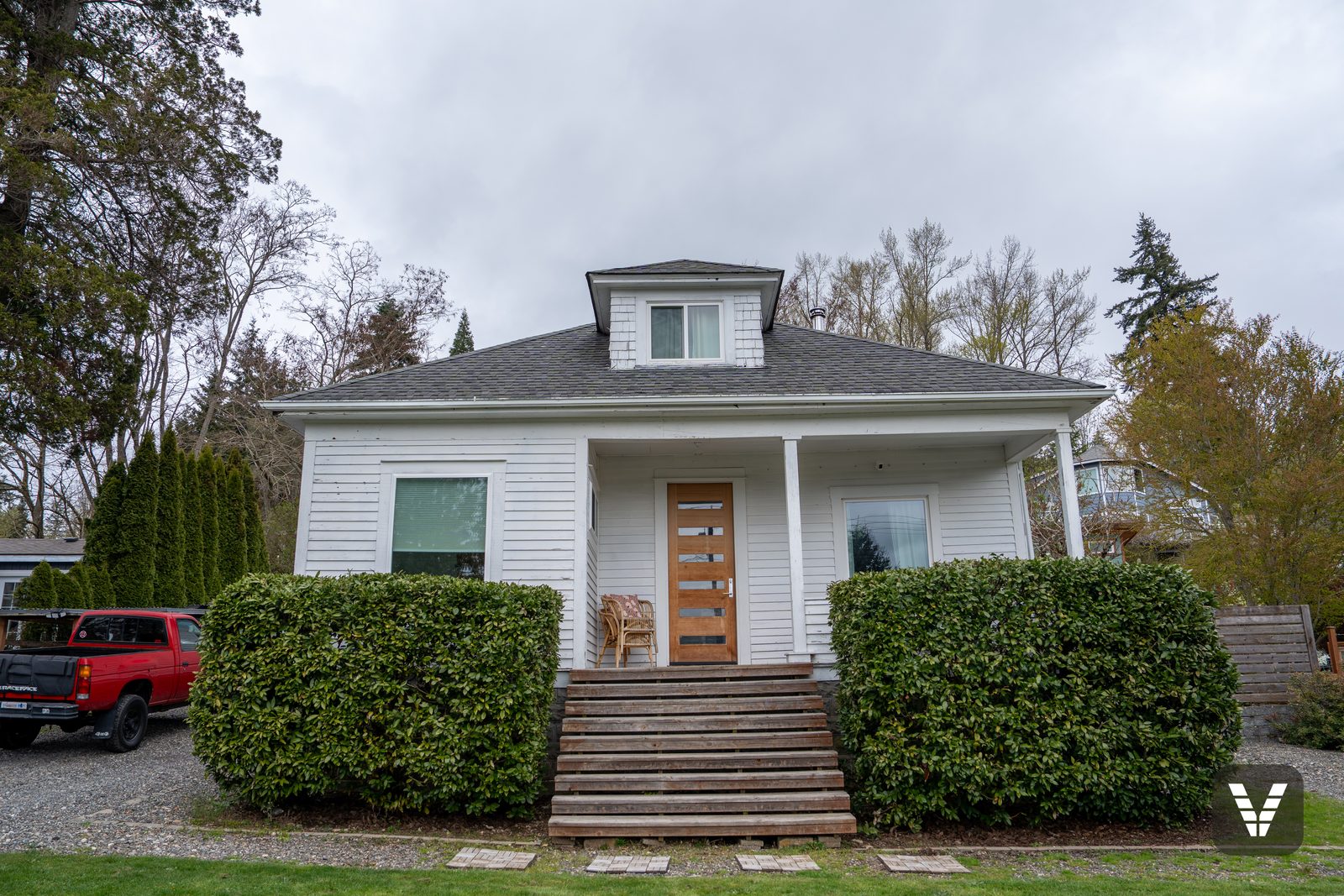
How to check your own walls in 20 minutes
You don't need tools — just a slow lap around the house. Walk each elevation and look down the wall at a shallow angle, where waves and cupping show up best. Press the bottom course of siding every few feet; it's the first place water settles. Check the walls that face the weather and the ones that never see sun — they fail first and for different reasons.
Then check the details: the joints around windows and doors, the caulk lines at corners and trim, and the siding just above roof lines and deck ledgers, where runoff concentrates. Inside, open the curtains and look at the sills and the drywall under each window on the walls that concerned you.
If everything is firm and the ugliness washes off — clean it, enjoy the result, and check again next fall. If you found soft spots, open joints, or interior staining, have someone look before the next wet season. That's exactly what a free estimate visit is for: we probe the suspect areas, tell you what's cosmetic and what's structural, and give you an honest read on whether you're looking at a repair or a replacement.