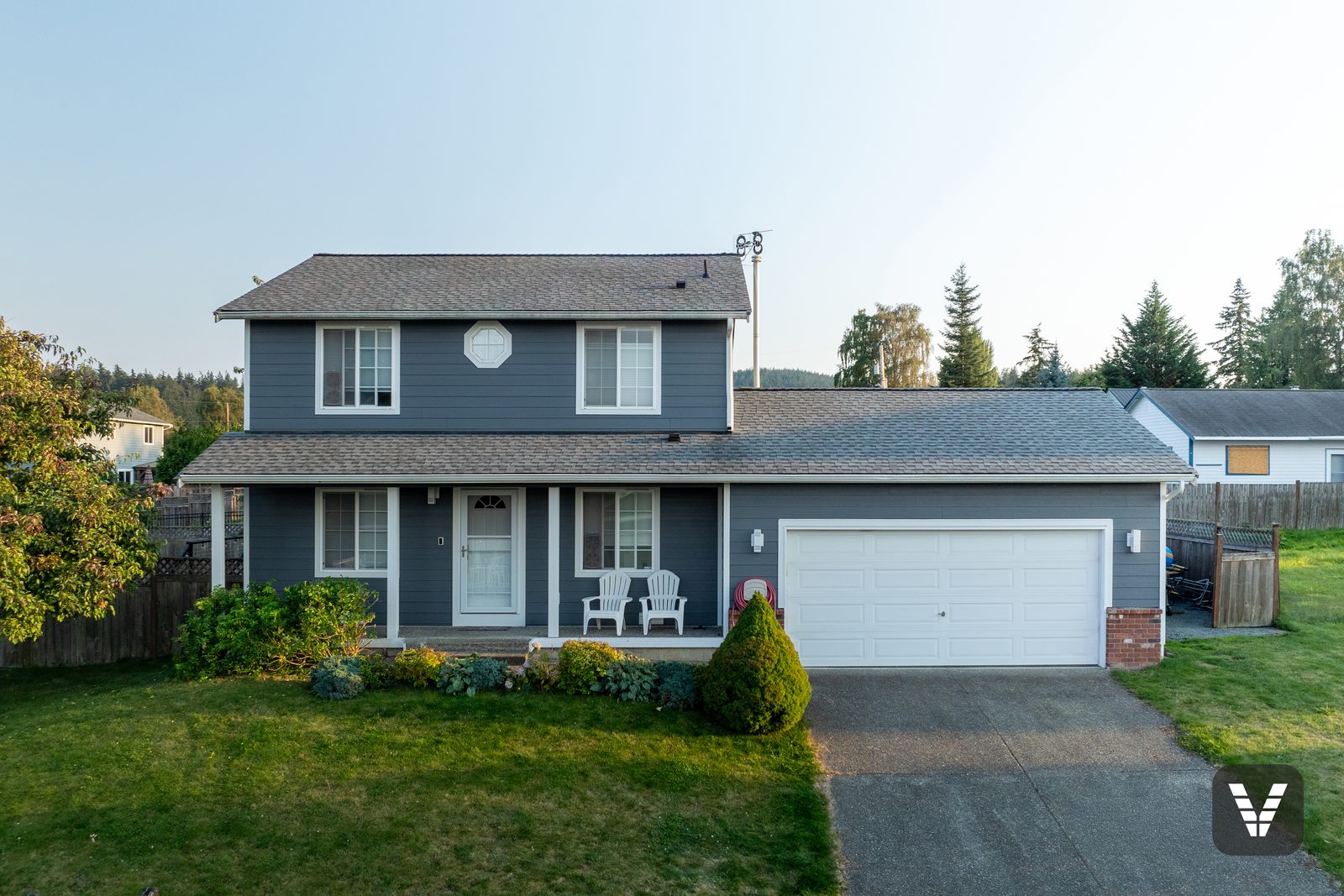
How Wind-Driven Rain Gets Behind Siding — and How to Spot It Early
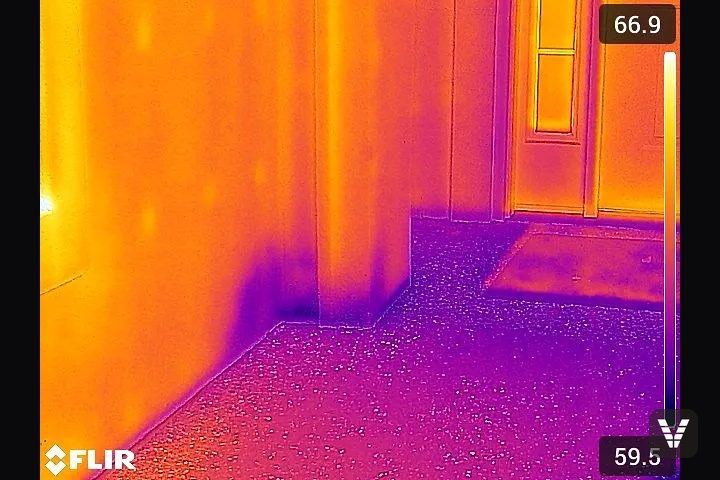
Short version: Northwest rain doesn’t just fall — wind pressurizes your walls and pushes water sideways and uphill into seams that ordinary siding was never designed to seal. The water gets in at the details: window corners, butt joints, penetrations, and roof-to-wall intersections. The early signs are stains, bubbling paint, and soft trim at exactly those spots — and by the time anything shows up indoors, the wall needs opening. Here’s how the failure works, what to watch for, and what a probe visit can tell you that a walk-by can’t.
Why sideways rain beats siding that sheds falling water
Most siding is designed around one assumption: water falls down. Lap siding, shingles, and panels all work like a roof turned vertical — each course overlaps the one below, so gravity carries water down the face and off the wall. For rain that falls, this works beautifully.
Western Washington breaks the assumption. Our storms ride in off the water with sustained wind, so for a good share of the wet season, rain arrives horizontally — and wind does more than change the angle. It pressurizes the windward face of your house, and that pressure difference actively pushes water through any opening it can find: up under laps, sideways into butt joints, around trim. Add capillary action — water's ability to wick into any gap thin enough — and a wall that easily sheds falling rain can steadily drink driven rain.
This is why a properly built Northwest wall is a system, not just siding. Behind the cladding there's a water-resistive barrier — house wrap or building paper — and flashing at every window, door, and penetration, all lapped shingle-style so that water which gets past the siding is caught and drained back out. Siding is the first line of defense, not the only one. Walls fail here when the second line was built badly, or when nobody notices the first line has been breached for years.
After the next hard sideways storm, walk your windward walls while they're still wet and watch how the water is moving. Streaks that converge on a window corner, a stain below a roof edge, or a joint that stays dark long after the wall dries are the wall showing you its weak points — that ten-minute walk is the cheapest inspection you'll ever get.
Where it gets in — and the early signs on your walls
Driven rain doesn't enter through the middle of a board. It enters at the details, and the details are where to look:
- Around windows and doors. The most common entry point in the houses we open up. Failed caulk, missing or backwards flashing, and gaps where trim meets siding let wind push water straight into the rough opening. Early signs: peeling or bubbling paint on trim, dark staining at the bottom corners of windows, swollen or soft sills.
- Butt joints and corners. Everywhere two boards meet end-to-end, and every inside and outside corner, is a vertical seam facing the wind. Watch for open joints you can see daylight-thin gaps in, cracked sealant, and paint failing along the seams first.
- Penetrations. Hose bibs, vents, light fixtures, deck ledgers, and anywhere a railing or awning was bolted through the siding. A single unflashed bolt hole can feed a rot pocket for a decade. Rust streaks below a fixture are water telling you its route.
- Roof-to-wall intersections. Where a lower roof dies into a wall, runoff concentrates and wind swirls. Missing kick-out flashing at these spots is one of the most damaging and most common defects in our region — the sign is a vertical stain streak on the siding below the roof edge.
Indoors, the wall speaks late but clearly: musty smell in one room, paint bubbling on an exterior wall, staining on drywall below a window, or trim that's gone soft. Interior signs mean water has already crossed the whole assembly — that wall has stopped being a watch item and become a to-do item.
What a probe visit finds that your eyes can't
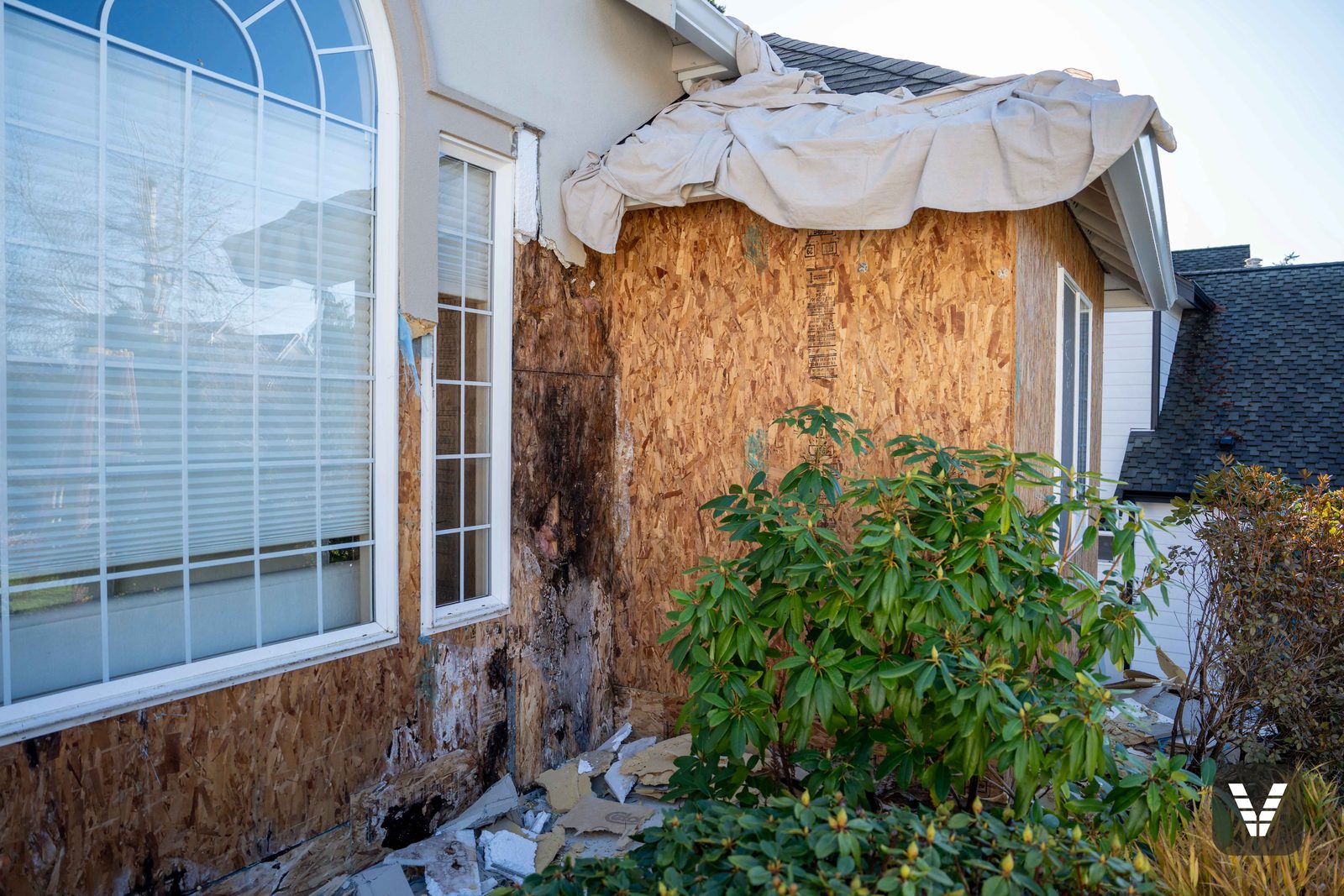
The frustrating thing about driven-rain damage is that the worst of it is invisible. Sheathing can be saturated behind siding that looks acceptable from ten feet away, because the water is entering at a detail and traveling inside the wall — often showing up a surprising distance from where it got in. Following it is what an in-person inspection is for.
Here's what actually happens on a probe visit. We walk the elevations and read the map you can't see from the sidewalk: stain patterns, sealant condition, how the flashing details were built, which walls face the prevailing weather. We press suspect areas — soft siding and trim give under a thumb or a probe where sound material doesn't. A moisture meter tells us whether a suspicious spot is dry history or an active leak. And where the evidence justifies it, with your permission, pulling a single board or a piece of trim shows the sheathing directly — one look at the wood settles what an hour of guessing can't.
The outcome is a map instead of a mystery: which walls are sound, which details need resealing or reflashing while the problem is still cheap to fix, and whether any area has crossed into rot repair. Caught early, driven-rain intrusion is often a maintenance item — sealant, a piece of flashing, a kick-out installed where one was skipped. Caught late, it's re-sheathing and sometimes framing repair, and that's a difference measured in thousands of dollars, not hundreds. Early is the entire game. Our estimate visits are free, and this kind of probing is exactly what they're for.