The Month the Walls Waited
Before & After
About This Project
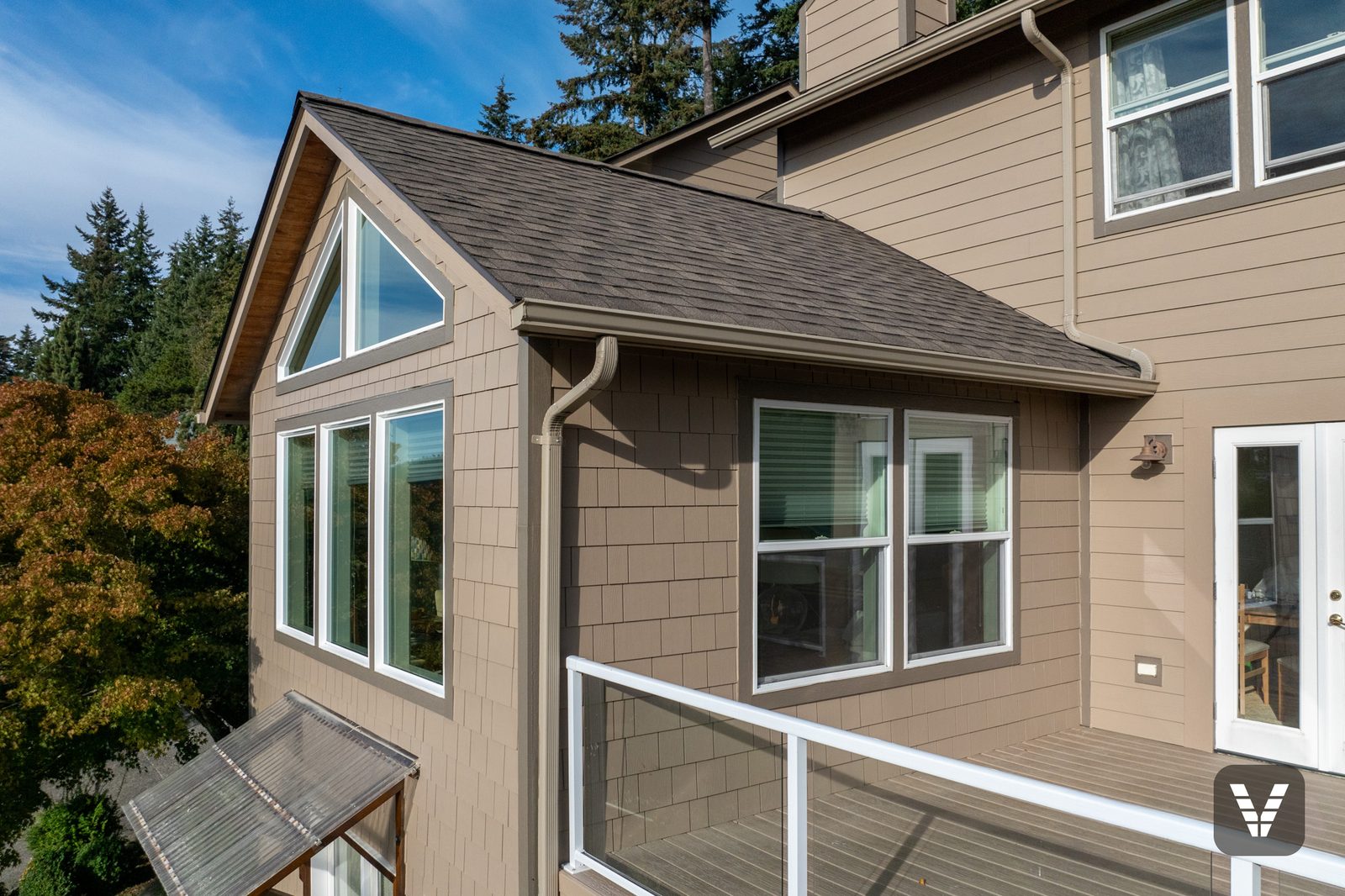
This Ferndale two-story first talked to us in the spring of 2024, thought it over for most of a year, and signed on a full re-side that winter: Boothbay Blue HardiePlank over the tired tan lap and shake, Arctic White trim, and the porch columns re-wrapped in pre-finished Hardie rather than patched and painted — the owners chose the honest fix over the cheap one there, and it shows in every photo below.
The plan said nothing about windows. The house had other ideas.
The Windows Nobody Planned
A tear-off tells the truth about a house. With the old siding gone and the walls stripped for inspection, the owners got their first real look at what their windows had become — seals sun-dried and cracked, well past sealing anything — and decided on the spot they didn't want new siding wrapped around old glass. Mid-project, they added all eleven windows and the patio slider to the job.
They chose Milgard Trinsic V300 units — white on white, Low-E glass, auto-locking — and trimmed the decorative grids from the order to keep the upgrade affordable. Because the walls were already open at the weather-barrier stage, nothing had to be undone: no trim pried off twice, no siding cut around existing frames. The windows would drop into openings that were already stripped, flash-taped, and waiting.
A Month Behind Tyvek
There was one cost to the mid-project decision, and we'd rather tell you about it than pretend it away: custom windows take four to five weeks to build. So the house stood wrapped in its fresh Tyvek HomeWrap — a weather barrier engineered for exactly this kind of exposure — while the order worked through the factory. About a month at a standstill, watertight and waiting.
Then everything landed at once: windows in, each one flash-taped to the barrier, Z-flashing over every opening, HardieTrim surrounds, and the Boothbay Blue lap closing over it all with a bearskin joint flashing behind every seam. This is why we tell homeowners with suspect windows to consider both projects at once: the flashing integrates the way the manufacturer intends, the trim goes on once, and the install itself costs less bundled than it ever would standing alone — it saves time and money in the same stroke. One month of patience bought this house a fully coordinated envelope.
The Finished Look
Boothbay Blue with white lines, black lantern sconces the owners picked out themselves — we hung them at no charge while the walls were open — and not a single opening on the house that isn't new glass in new flashing. The eaves and rakes were sprayed to match the siding, the roof fascia painted crisp white, and the last of the old two-tone era went out with the demolition dumpster.
From the street it reads as a new house. Up close it reads as a coordinated one — which is exactly what you get when the siding and the windows stop being two projects.